A practical reference for everything you'll need in your soap making workspace — from the essential to the eventually useful.
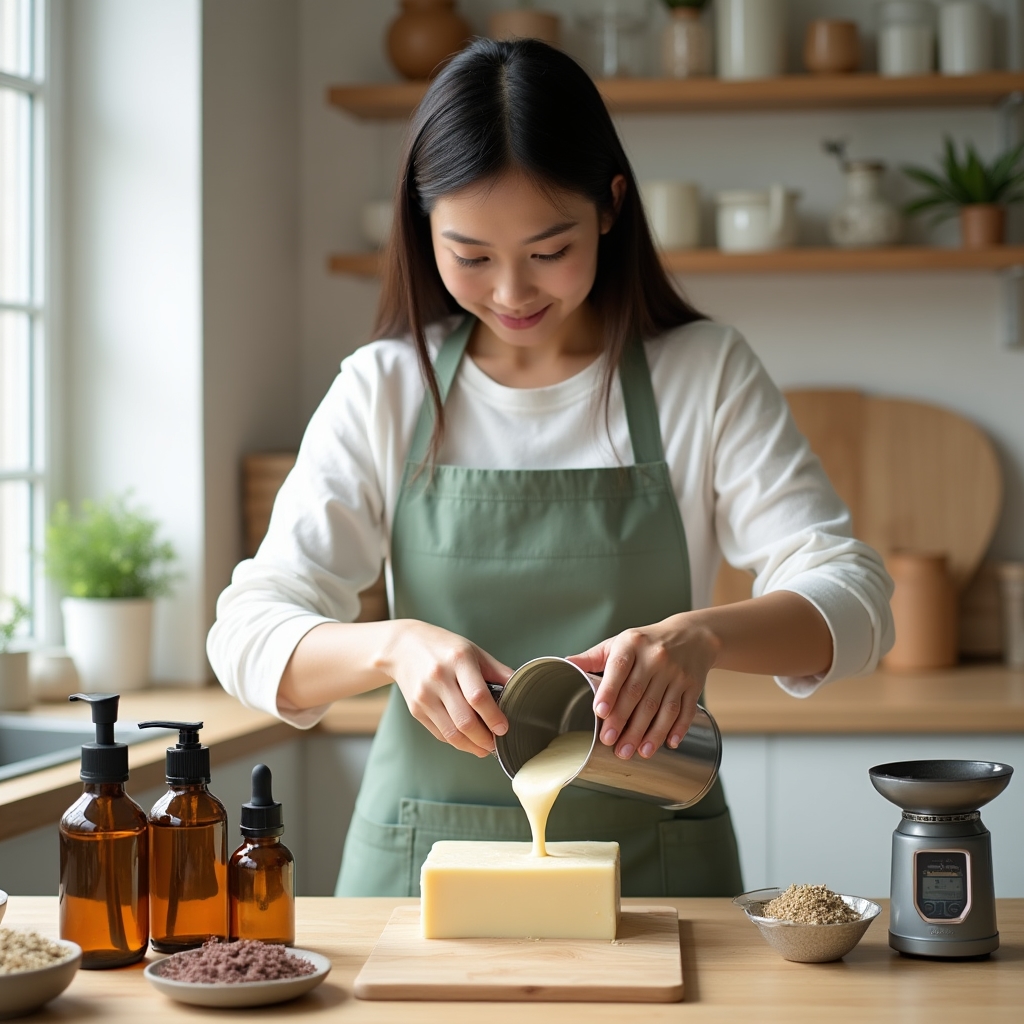
The barrier to starting is lower than most people expect. A kitchen scale, a stick blender, some stainless steel containers, and a basic silicone mold will get you through your first batches. The more specialized equipment comes later, once you know what you're actually reaching for.
Before anything else. These aren't optional accessories — they're the difference between a safe workspace and a preventable injury.
Soap making is measured by weight, not volume. Precision matters more here than in most cooking.
Start with a basic silicone loaf mold. It's forgiving, easy to unmold, and works for most beginner recipes. Expand from there.
Your first soap doesn't need twenty oils. A simple three-oil recipe teaches you more than a complicated one.
Adds slip and a silky feel. Helps with lather quality. Gentle enough for sensitive skin formulations. Use at 1 tablespoon per pound of oils.
Creates a striking black bar. Often combined with tea tree or eucalyptus. Adsorbs surface impurities. Turns the batter very dark very quickly.
One of the few botanicals that stays orange-yellow in soap. Gentle exfoliant. Often infused into the oil phase rather than added at trace.
Decorative on top or mixed in. Go brown when embedded in the bar itself — a common surprise for new makers. Best used as a top decoration.
Stronger than kaolin. Creates a deep green color that's pH stable. Good for detoxifying formulations. Has a subtle earthy scent of its own.
Finely ground oats that disperse evenly through the batter. Soothing properties. Adds a warm, creamy color and subtle texture to the finished bar.
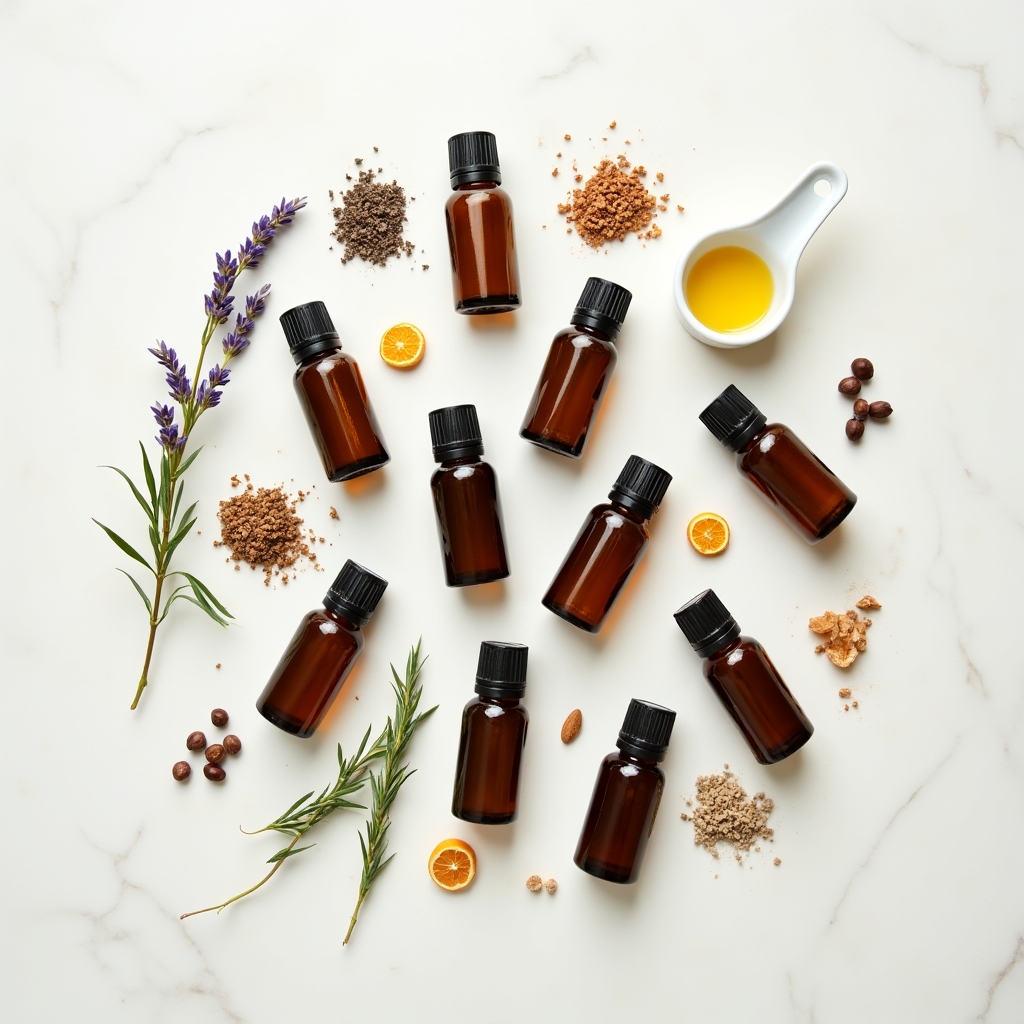
Not all essential oils behave in cold process soap. Some accelerate trace so fast you can barely pour. Others fade completely during saponification or cure. Knowing which is which before you start saves a lot of frustration.
Lavender, peppermint, eucalyptus, cedarwood, patchouli, lemongrass, rosemary. These hold their scent well through saponification and curing.
Clove, cinnamon, and other spice oils can accelerate trace significantly. Citrus oils often fade but can be anchored with a fixative.
Vanilla-based fragrance oils often turn soap brown. Some floral absolutes are cost-prohibitive at soap-appropriate usage rates.