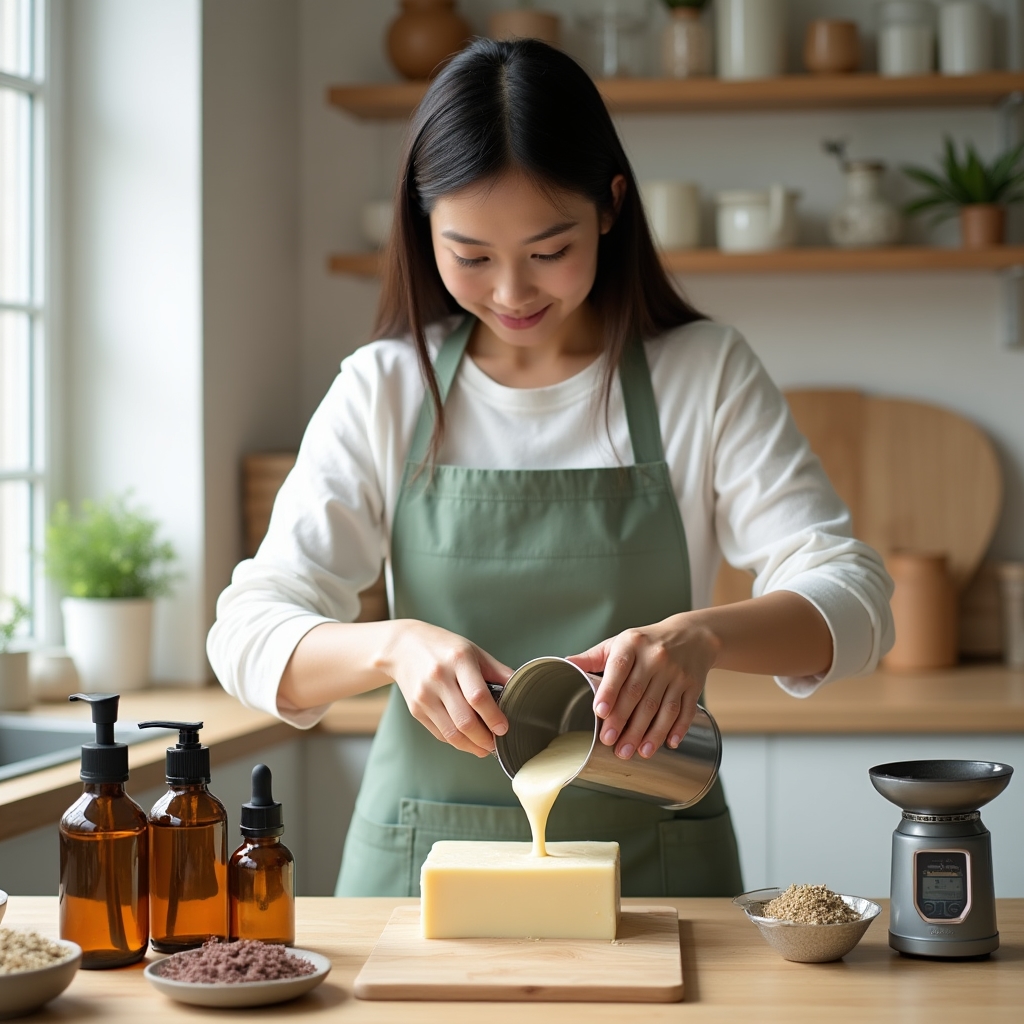
Structured modules that build on each other. Start with the fundamentals and work toward formulations that are genuinely your own.
Foundation modules build the knowledge base. Intermediate modules expand it. Advanced modules let you apply everything with real creative latitude. Each level assumes the previous one — which is why the order matters.
The chemical reaction that turns oil and lye into soap. SAP values, what they mean, and how to use a lye calculator accurately. This module covers the math without making it intimidating.
Sodium hydroxide is effective precisely because it's reactive. This module covers what that means in practice: protective equipment, workspace preparation, mixing procedures, and what to do if something goes wrong.
Every oil brings something different to a soap bar. Coconut oil for lather and hardness. Olive oil for conditioning. Castor oil for bubbles. Palm alternatives for structure. Learn what each does and how to balance them.
Fragrance in cold process soap is a whole sub-discipline. Some essential oils accelerate trace dramatically. Others fade during saponification. Learn usage rates, note theory, and which oils perform reliably in high-pH environments.
Herbs, clays, activated charcoal, oatmeal, dried flowers — each one interacts with soap batter differently. Some colorants morph in high pH. Some botanicals go brown. This module separates what works from what just looks good in the jar.
Your mold choice affects everything from insulation to unmolding difficulty to the final bar's surface texture. Silicone is forgiving. Wood holds heat well. Acrylic shows off swirls. Individual cavity molds require thicker batter. Compare them all practically.
Taiwan swirls, drop swirls, layers, pencil lines, embeds, and textured tops. This module is about the visual craft — how to manipulate batter consistency and pour technique to create bars that are genuinely distinctive.
The same botanical knowledge that informs soap making applies to bath salts, body scrubs, lotion bars, and whipped body butter. Different chemistry, same ingredient logic. This module expands your personal care repertoire significantly.
If you want to know more about a specific module or how the learning paths are structured, reach out directly.